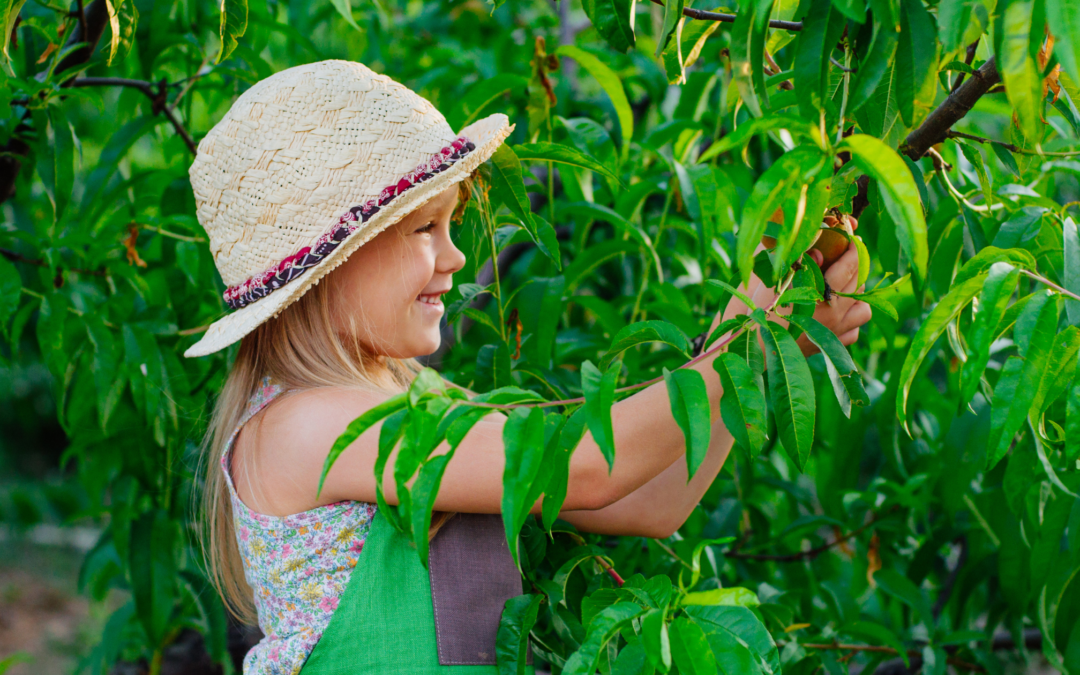
Homeschool Science Lessons: From Sapling to Harvest
Editor’s Note: This article is the last in a 4-part series titled “Science in the Backyard: Hands-On Homeschool STEM.”
When we decided to plant peach trees in our backyard, we were hoping for fresh fruit someday. What we didn’t expect was how many lessons would grow alongside our trees.
If you’re a homeschooling family looking for a long-term science project, then consider growing a fruit tree. What for us began as a simple gardening project quickly became a multi-year journey of science, patience, and observation.

Year One: Planting and Planning
Our project started with research. Together, we asked:
- What kind of peach trees grow best in our climate?
- How much sunlight and space do they need?
- When is the best time to plant?
We learned about dormancy, root systems, and the importance of proper spacing for airflow and growth. Measuring distances between trees turned into a practical math lesson, while digging holes and preparing soil introduced concepts like soil composition and drainage.
Planting day was hands-on and memorable. Together, we applied our newfound knowledge, practicing important planting techniques like exposing the tree’s root flare, root-pruning root-bound saplings, mulching, and watering them in. This marked the beginning of our long-term experiment.
Year Two: Growth and Care
As the trees began to establish themselves, the focus shifted to care and observation.
We learned:
- How to identify new growth
- Why pruning is important for tree health
- How water, sunlight, and nutrients affect development
After one year of growth, it was time to prune. This became a lesson in both biology and decision-making. Timing was important. We pruned in late winter. Pruning right before the trees emerged from dormancy minimized stress on the plants. Cutting healthy branches felt counterintuitive at first, but we learned that selective pruning helps shape the tree, minimize disease, and encourage better fruit production later.
We also encountered challenges: deer, insects, and unpredictable weather. A freak hail storm caused significant damage to our new trees, and broken branches had to be removed. Each problem became a chance to research solutions and understand how living systems respond to stress.
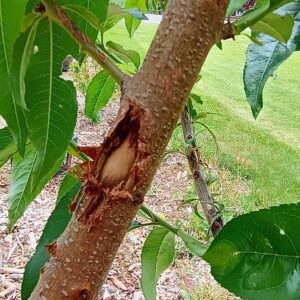
Hail damage two months later
Year Three: Blossoms and Pollination
The first blossoms were a turning point. Delicate pink flowers covered the branches, and suddenly the project felt real.
This stage introduced new concepts:
- The role of flowers in reproduction
- Pollination by bees and other insects
- The connection between blossoms and fruit
We spent time observing pollinators, noting which insects visited the trees and when. We began to see our yard not just as a garden, but as part of a larger ecosystem.
However, our peach trees were still too immature to sustain fruit. We learned that by nipping buds now, what energy would have gone into fruit production would instead go to new growth and root expansion. We’d miss out on a few peaches now, but we’d get a healthier tree with more productive harvests in the future.
Year Four and Beyond: Fruit and Patience
When the first peaches finally appeared, we learned about thinning fruit—removing some peaches so the remaining ones could grow larger and healthier.
Peach trees will grow more fruit than they are capable of actually sustaining. If we didn’t thin them, not only would our peaches be smaller and less tasty, but the weight of so many peaches can actually break off whole limbs and damage our trees.
Waiting for the fruit to ripen required patience. We checked color, texture, and taste, learning that timing matters in both gardening and science.
When harvest day arrives, it will be more than just a day of picking fruit. It will be the result of years of care, learning, and persistence.
Lessons That Took Root
Through growing peach trees, our family experienced:
- Biology: plant growth, reproduction, and seasonal cycles
- Environmental science: weather patterns, soil health, and ecosystems
- Math: spacing, measuring growth, and tracking time
- Responsibility: consistent care over months and years
But beyond academics, we learned something harder to teach: patience. Unlike quick experiments, trees don’t rush. They grow on their own timeline.
The Bigger Picture
Planting peach trees gave our family not only fruit, but a living, evolving classroom, one that changes with the seasons and rewards long-term commitment.
In a world that often expects instant results, tending to a tree offers a different kind of lesson: some of the most meaningful outcomes take time, care, and trust in the process.
And every bite of that first ripe peach will carry the story of everything we had learned along the way.
Science in the Backyard: Hands-On Homeschool STEM
To read other articles in this series:
- From Seed to STEM: Teaching Science Through the Garden
- A Hands-On Lesson in Nature Stewardship
- Homeschooling Chemistry in the Garden
What are your thoughts on this topic? I invite you to join other homeschooling parents in the Homeschool Connections Community or our Facebook group.