
Homeschooling Chemistry in the Garden
Editor’s Note: This article is the third in a 4-part series titled “Science in the Backyard: Hands-On Homeschool STEM.” The final article will be published on next Tuesday.
Growing Blueberries Through Soil pH
When we decided to plant blueberries with our children, we quickly discovered this wasn’t just a gardening project but a chemistry lesson waiting to happen.
Blueberries are known for being a bit particular. Unlike many garden plants, they require acidic soil to thrive. That single requirement opened the door to exploring the chemistry of pH in a hands-on, memorable way.

Step 1: Asking the Right Question
Before planting, we started with a simple question: Why do blueberries need acidic soil?
This led to learning about the pH scale, which measures how acidic or alkaline a substance is. Our children discovered that:
- A pH below 7 is acidic
- A pH above 7 is alkaline
- Blueberries prefer a pH between about 4.5 and 5.5
Blueberries need acidic soil to absorb essential nutrients like iron, magnesium, and phosphorus. Without this acidity, blueberries have difficulty absorbing these nutrients, leading to chlorosis (reddening leaves due to decreased chlorophyll), stunted growth, and poor fruit production.
Instead of just memorizing numbers, we connected the concept of pH to a real goal: helping our plants grow.
Step 2: Testing the Soil
Next, we tested the soil in our yard. Using a simple pH test kit, we found our clay-heavy soil was alkaline—around 7.5. This created a problem to solve: How do we change the soil to make it more acidic?
Now chemistry became practical.
Step 3: Changing Soil Chemistry
We researched ways to safely lower soil pH. We chose to mix in soil amendments like:
- Ammonium sulfate
- Elemental sulfur
- Pine needles
- Peat moss
As we worked, we learned that most of these materials don’t change pH immediately. Ammonium sulfate was faster-acting, directly lowering soil pH but only temporarily.
Long-term solutions like elemental sulfur involve chemical and biological processes in the soil that gradually make it more acidic over time. This was made possible by microbes like Thiobacillus through a process called oxidation. The required elemental sulfur was a predictable amount, and we could refer to online tables to determine how much to apply. For example, to reduce our soil pH from 7.5 to 6.6, we would need 1.5 lbs of elemental sulfur per 100 square feet.
This introduced ideas like:
- Chemical reactions happening in the soil
- The role of microbes in breaking down materials
- How changes in concentration affect outcomes
Step 4: Observing and Measuring Change
Over the next several weeks, we tested the soil regularly and recorded the results.
We tracked:
- Changes in pH over time
- Plant growth and leaf color
- Differences between treated and untreated soil
We began to see patterns: as the soil became more acidic, the blueberry plants looked healthier and more vibrant. This reinforced an important scientific concept: cause and effect through controlled variables.
Step 5: Connecting Chemistry to Results
By the end of our first season, our blueberry plants had survived. But our success was mixed. We witnessed a significant amount of chlorosis on our plants, suggesting nutrient deficiencies. Because of the low pH requirements of blueberries, this was likely an absorption problem and not due to a lack of nutrients in the soil. Remember that most acidifiers take time to work—months or sometimes even years.
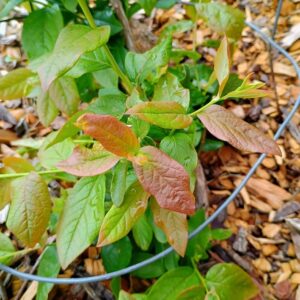
Reddening blueberry leaves from chlorosis
Our second season was better. We continued to periodically test our soil and repeated applications of elemental sulfur. Our plants grew, with greener foliage, and we had our first blueberries!
This year (our third season), we’re growing a new blueberry bush in a 25-gallon pot filled with 50% peat moss and 50% potting soil. This will allow us to create more ideal growing conditions and better control soil pH. We’re excited to compare this to our in-ground plants and see how results might differ.
Our children understood that soil pH affects how plants absorb nutrients. In acidic soil, blueberries can access the nutrients they need; in less acidic soil, those nutrients become harder to absorb.
What started as a gardening task had turned into a clear demonstration of:
- Acidity and alkalinity
- Chemical change over time
- Real-world applications of the pH scale
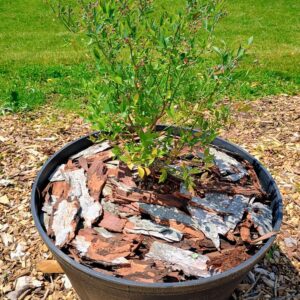
Potted blueberry bush
The Takeaway
Learning chemistry through planting blueberries transforms an abstract concept into something visible and meaningful. Instead of asking, “When will I ever use this?” students can see the answer growing right in front of them.
They don’t just learn what pH is but also how to test it, adjust it, and observe its effects in a living system.
And when we finally harvested our first handful of blueberries, we tasted the results of chemistry in action.
What are your thoughts on this topic? I invite you to join other homeschooling parents in the Homeschool Connections Community or our Facebook group.