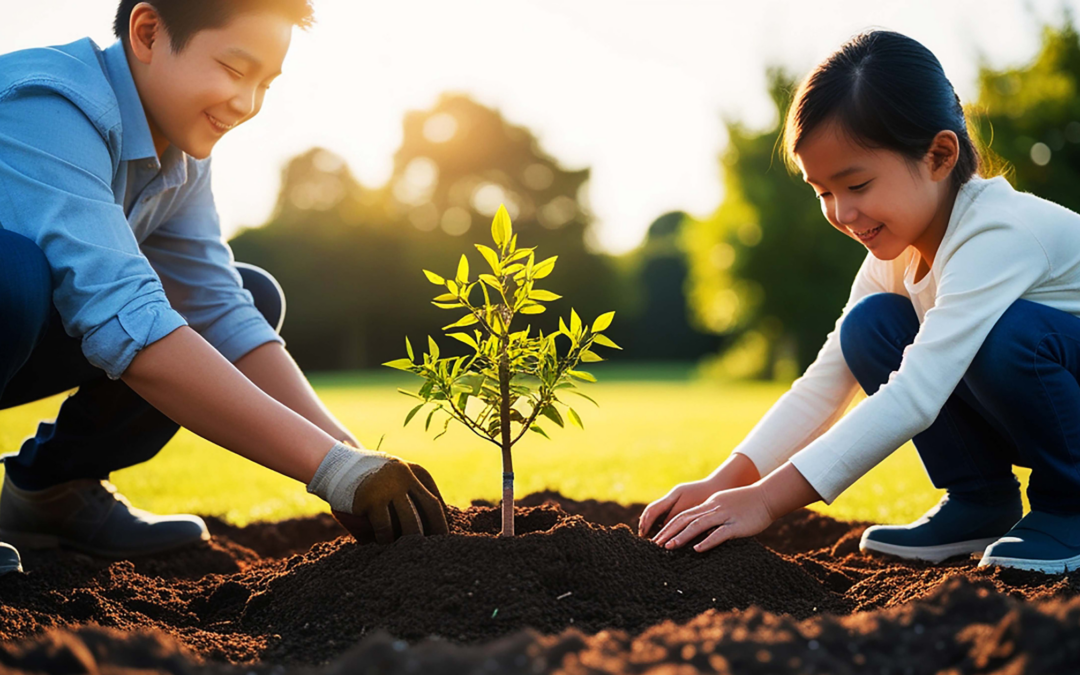
A Hands-On Lesson in Nature Stewardship
This article is the second in a 4-part series titled “Science in the Backyard: Hands-On Homeschool STEM.” Future articles will be published on subsequent Tuesdays. You can find the first article here: From Seed to STEM: Teaching Science Through the Garden by Christian Ohnimus.
Replacing Invasive Trees with Native Species
When we moved from the suburbs to the country, our six kids had a lot more space: a bigger yard, a garden, and woods to play in. But that first spring, we noticed something unusual in the woods that border our yard. Several fast-growing trees had popped up seemingly overnight, crowding out other plants. At first glance, they looked healthy. But a closer look revealed they were tree-of-heaven, an invasive species known for spreading aggressively and outcompeting native plants.
Named for its impressive height, tree-of-heaven was brought from China to North America in the 1800s as food for silkworms. The silkworms died. But the tree-of-heaven thrived. Not only does tree-of-heaven compete with native plants, but it’s also a host plant for the spotted lanternfly, an invasive insect (also from China) that causes significant damage to crops and native plants.

Instead of ignoring the problem, our family turned it into a meaningful homeschool science and stewardship project.
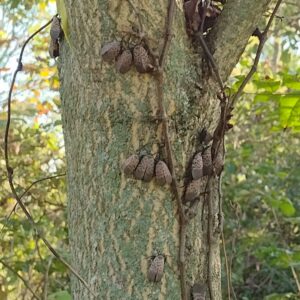
Spotted lantern flies on tree-of-heaven.
Step 1: Identifying the Problem
The first step was learning to properly identify the invasive tree. We examined:
- The long, compound leaves (similar to sumac or black walnut)
- The smooth gray bark
- The strong, unpleasant odor when leaves were crushed
We researched how tree-of-heaven spreads quickly through both seeds (one tree can produce 300,000 seeds!) and underground roots, forming dense colonies that push out native species. This led to a broader discussion about ecosystems, why biodiversity matters, and the problems that arise when invasive species are present where they don’t belong.
Step 2: Taking Action
Our family developed a plan to responsibly remove the invasive trees. Smaller saplings were pulled by hand, making sure to remove as much root as possible. Larger ones were carefully cut down.
But we made a mistake. We learned that simply cutting the tree down isn’t always enough; tree-of-heaven can regrow from its roots. Like the hydra from Greek mythology, if you cut it down, even more will grow in its place. This introduced the idea that environmental problems often require persistence and informed strategies. While seedlings can be dug up, suckers (clones) may appear to be seedlings but are attached underground to the parent tree. To prevent suckers, established tree-of-heaven must be killed with herbicides before being cut down.
Safety, proper tools, and local guidelines were all part of the lesson.
Step 3: Restoring with Native Trees
Simply removing invasives isn’t enough. Killing tree-of-heaven neither creates a healthy ecosystem nor prevents future invasives from retaking the area.
After clearing the area, our family’s next step is focused on restoration. We’ll plant native species, such as maple and oak, to replace the invasive tree-of-heaven we removed.
Together, we researched:
- Which tree species grow best in our region
- Soil conditions and sunlight needs
- How these trees support local wildlife
We plan to plant saplings and create a care plan that includes watering schedules and mulch placement to protect young roots.
Step 4: Observing the Impact
Once we’ve replaced the invasive tree-of-heaven with native, beneficial species, our job won’t be done. Environmental stewardship doesn’t end. Over time, we expect our area to change. Instead of a dense patch of invasive growth, we hope to foster a more diverse ecosystem.
Future changes that our children may observe can include:
- Increased insect activity
- Birds returning to the area
- Native plants reappearing nearby
Our kids can keep a nature journal, noting seasonal changes and measuring tree growth, turning their stewardship work into an ongoing homeschool science study.
The Bigger Lesson
This project will go beyond tree removal and planting. It has helped our kids understand that:
- Human actions can harm or help ecosystems
- Native plants play a crucial role in environmental balance
- Stewardship is an ongoing responsibility, not a one-time task
At the end of the day, our kids got to experience ownership of our property and what it means to care for the land in a direct, tangible way.
Why It Matters
Replacing invasive species with native trees like maple and oak isn’t just good for one yard; it supports the entire local ecosystem. Native trees provide food and shelter for wildlife, improve soil health, and contribute to long-term environmental stability.
For homeschoolers, this kind of project blends science, responsibility, and real-world impact in a way no textbook can match.
It’s one thing to learn about ecosystems. It’s another thing to restore one with your own hands.
What are your thoughts on this topic? I invite you to join other homeschooling parents in the Homeschool Connections Community or our Facebook group.