Screen Time and Teen Posture: Simple Exercises That Make a Big Difference
Remedies for Common Teen Postural Problems
In our last installment of this series, I discussed some postural problems common among teenagers who spend too much time sitting. These included the forward-head posture (where one head is shifted forward), the kyphotic or “hunchback” posture, and lordosis or “saddlenback” posture. Each of these postural deviations results from too much time sitting and looking down.
These postural problems have become incredibly common due to the increasing amount of time people of all ages—but especially youth—are spending looking at screens. As of 2025, the average American spends 7 hours per day on a screen. For young people, this is even higher, with estimates placing youth screen time at around 9 hours daily.
As we discussed in our previous article, prolonged sitting can cause a host of muscular problems, including weakened lower back muscles, overly tight chest muscles, and permanently scrunched-up trapezius muscles (the “shrugging” posture). The good news is that these common postural deviations can be corrected with some stretches, muscle strengthening, and a few lifestyle changes.

Stretching Tightened Muscles
Postural deviations occur when some muscles are too tight, and others are too lengthened, so the body can no longer maintain a healthy, upright posture. Stretching the tightened muscles and strengthening the lengthened ones helps restore the muscular equilibrium needed to keep the body aligned. Here we will review some common stretches for each deviation discussed (in the interests of space, rather than explaining each stretch, I will merely be linking to resources offering tutorials for further reference).
Forward-Head Posture
Forward-head posture results when the spine extensors and upper traps are too tight, producing the forward-tilter slouching pose. To redress this, chin tucks and cervical retraction (standing straight and pressing the back of the head against a wall for 10-15 seconds at a time) are very helpful. Trap stretches are also helpful to loosen the traps, the upper back muscles responsible for the “shrugging” posture.
Kyphosis (Hunchback)
In kyphosis, the tight muscles are typically the chest muscles (pectoralis) and hamstrings, which pull the shoulders forward and the spine into a forward curve. Therefore, chest and hamstring stretches are helpful. The Cat-Cow Pose is a common stretch used for all postural deviations of the spine. Begin on your hands and knees, then arch your back like a cat, then depress the spine, rounding it like a cow. This is a great stretch for building flexibility in your back. A good way to stretch the hamstrings is with the Superman Pose; lie on your stomach with arms and legs extended. Lift your arms and legs off the ground, holding for 10-15 seconds. Healthliine has a whole slew of recommended stretches for postural kyphosis.
Lordosis (Saddleback)
For lordosis, the tight muscles are primarily the hip flexors and the lower back extensors. This is often accompanied by weak abdominal and gluteal muscles, which are supposed to help stabilize the pelvis. The knee-to-chest stretch, pelvic tilts, the Bird Dog Pose, and the bridge pose are all helpful for stretching these muscle groups.
It’s good to perform the applicable stretches daily, if possible, holding each for 15-30 seconds, 2-3 times a day, to see results. For those whose day is especially sedentary.
Strengthening Lengthened Muscles
Muscles that are overly-tightened usually become so because a corresponding muscle is excessively stretched or weakened, causing the tightened muscle to compensate. Most postural deviations result from a combination of tightened muscles in one place and overly loosened muscles in another. Correction of postural deviations should therefore not only include stretching of tight muscles but also strengthening of loose muscles. Most of the exercises we will discuss here can be done with a simple set of dumbbells at home.
Forward-Head Posture
To remedy forward-head posture, you’d want to practice exercises that strengthen the neck and upper back, such as the rhomboids, rear delts, and middle and lower trapezius. These muscles are responsible for pulling the head back and stabilizing the shoulder blades. There are a whole host of back-strengthening exercises that can target these muscles, such as the bent-over dumbbell row, the single-arm dumbbell row (which can be modified to be done on a coffee table or even the floor), or the prone lateral raise. This article from Healthline offers great recommendations for easy, at-home back exercises that help reduce forward-head posture.
Kyphosis
For a kyphotic posture, you want to strengthen the upper back (so the exercises we discussed for forward-head posture will all work), as well as the core and glutes (buttocks). There are a ton of core exercises that can be done at home, ranging from beginner to advanced (see here for a detailed breakdown). For glutes, variations of weighted squats and lunges are ideal. This article from Runner’s World has solid demonstrations of basic weighted lunges and squats.
Lordosis
If your teen has a lordotic posture, the core and glutes also require strengthening, so the core and glute exercises discussed above for kyphosis are also applicable to lordosis.
For any of these conditions, pick around 3 exercises and have your teen perform them 3 or 4 times a week. Around 3 sets of 12 repetitions for each exercise is a good starting range. All of these exercises can be done with bodyweight or basic dumbbells, so you don’t need much. It is important to note, however, that for such muscle-strengthening exercises to be successful, they need to be challenging enough to stimulate muscle growth. In other words, the exercises need to be difficult. Make sure your teen is lifting a weight sufficiently challenging for them. A good rule of thumb is that the weight should be light enough that they can do the exercise correctly and maintain full control at all times, but by the end of their set, they should be slowing down their movements and finding each additional repetition increasingly challenging.
Lifestyle Changes
Lifestyle habits are the primary cause of most postural deviations. Truly addressing postural problems requires not only remedial training but a long-term change of lifestyle.
The most obvious change one can make to address the postural deviations we’ve been discussing is to simply spend less time sitting. The more time your child spends upright, active, walking around, the better! But if it’s not possible to reduce the total amount of time on a screen, here are some practical tips for at least mitigating the negative side-effects of too much sedentary time:
- Have your child take breaks every 60 minutes by getting up and moving around. This can be an ideal time to perform the stretches discussed above.
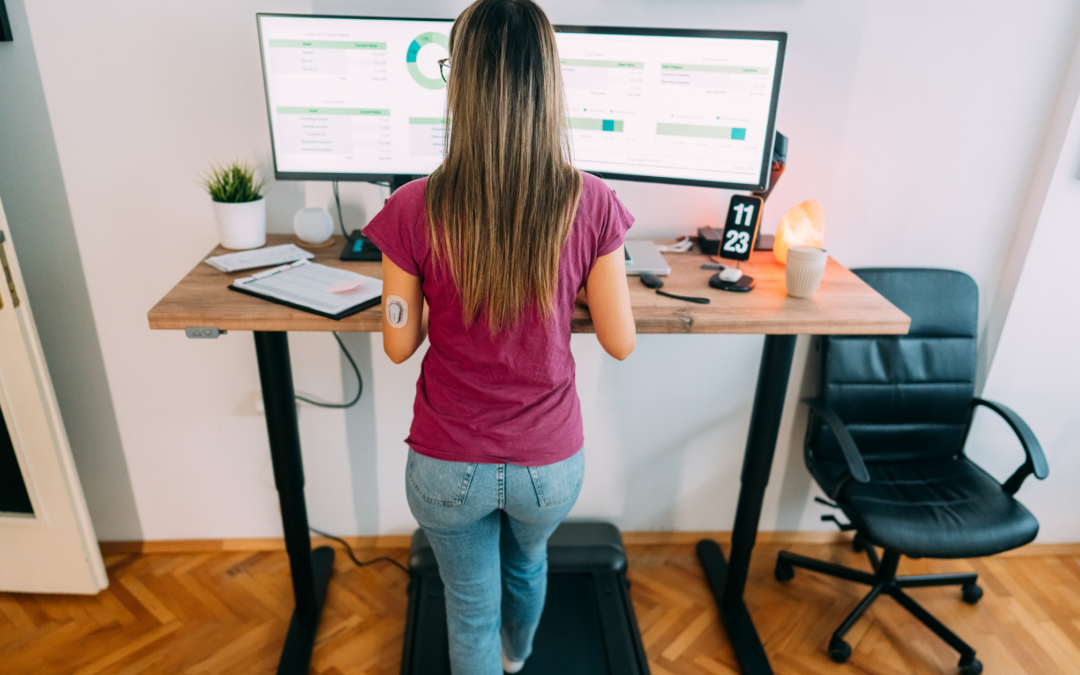
- Consider getting an ergonomic computer desk that requires standing while using it. Then require your teen to spend at least part of each day at the standing desk.
- Encourage your teen to hold their phone in front of their face instead of looking down at it. This may elicit vehement protest, but if you can get them to do it even a little bit, it will be a win.
- If your child spends a lot of time gaming, get an orthopedic gaming chair designed to support vulnerable areas of the back. This can help prevent the onset of postural problems.
- If time allows, get your kids into a regular sports or weight-training program so they can become better attuned to their bodies’ movements and take an active interest in fitness.
Conclusion
Remember, health over the course of one’s life is profoundly connected to lifestyle habits. If we want to ensure our children not only live long but are able to fully enjoy the life God has given them, it behooves us to do our best to ensure they develop the healthy habits needed to thrive (see my article, “Active Bodies, Joyful Lives: A Homeschool Dad’s Case for Moving More“).
The information provided in this article is for general educational and informational purposes only and is not intended as medical advice, diagnosis, or treatment. Every child’s body and health situation is unique. If you have concerns about your child’s posture, pain, or physical development, please consult your family physician or a qualified healthcare professional for personalized guidance.
What are your thoughts on this topic? I invite you to join other homeschooling parents and me in the Homeschool Connections Community or our Facebook group.