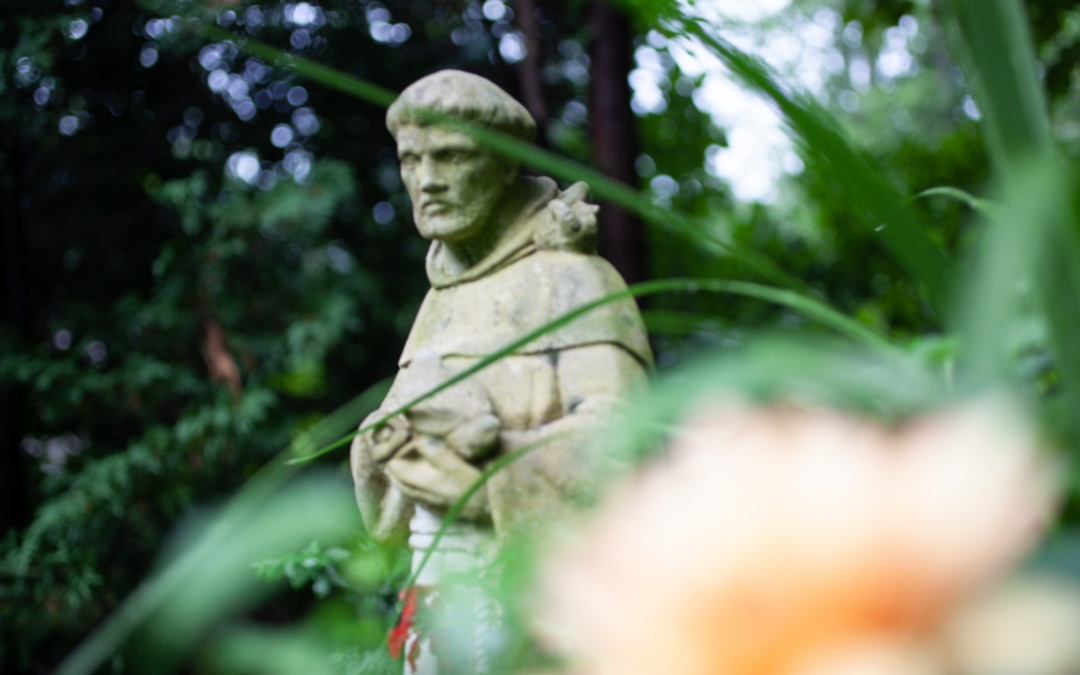
Celebrating the Year of St. Francis in Your Homeschool
Pope Leo has officially designated 2026 the Year of St. Francis of Assisi, and I couldn’t be more delighted! Of course, I might be a little biased as my confirmation name is Francis. Yet even so, I think it is wonderful that our Holy Father has asked all Catholics to meditate on the life and virtues of this great saint on the 800th anniversary of his death.
When I was a young Christian, I was deeply moved by St. Francis’s example and desperately wanted to imitate him in every way—I even walked around my town barefoot in the rain! During this Holy Year, we, too, should find ways to imitate St. Francis… though without necessarily going around barefoot.
Let’s talk about some ways that you can make your homeschool a little more “Franciscan” during this Year of St. Francis!

Lock in Your Humility
One of the virtues for which Francis was best known was his profound humility. He considered himself of little account and was eager to show deference to those around him. Sometimes, uncomfortable with the position of leadership he held, he would order his own friars to boss him around or tell him about his faults to avoid becoming prideful. Francis knew that humility was necessary to enter the kingdom of heaven, and let this conviction shape his daily life.
Here are some ideas for practicing humility in your own home:
- What is the most unpleasant job or chore that needs to be done? Find it, do it, and don’t seek any recognition or thanksgiving for it.
- Choose a day and let others dictate your time; make yourself available for whatever someone else wants to do.
- When you hear someone say something incorrect, resist the urge to correct them (unless it’s your job or health and safety are on the line).
- Devote extra prayer time to interceding for others’ needs, thinking about their problems rather than your own.
- Make a firm resolution to avoid unnecessary boasting or self-reference in conversations.
- Pray hard for the grace of humility.
Dial up Your Detachment
In Catholic tradition, detachment is the practice of avoiding unnecessary emotional entanglements with the things of this world. As long as we are in the world, we all have to deal with the things of the world (material possessions, property, finances, etc.). But just because we use these things does not mean we should become too emotionally invested in them. Our Lord warns us that “where your treasure is, there your heart will be” (Matt. 6:21). Our attachments should be on God and His kingdom, not our petty possessions. St. Francis understood this well. An early Franciscan custom was for new members of the order to give all their possessions away in bold, public gestures in order to demonstrate this detachment.
Here are some ideas for practicing detachment in your own home:
- Pick one possession you are particularly fond of and give it away to someone who needs it more than you do.
- For one week, keep a running list of every time you feel anxious or irritated about money, possessions, or property. At the end of the week, bring that list to prayer and ask God to loosen those attachments.
- Conduct a family “fast” where everyone abstains from a favorite convenience or luxury—streaming, takeout, a beloved toy—and reflect on how quickly comfort becomes expectation.
- The next time something breaks, is lost, or is taken from you, practice responding with genuine peace rather than distress. Use it as an opportunity to say, with Job, “God gave it, God has taken it away; blessed be the name of the Lord.” (Job 1:21)
- Go through your closets and storage spaces and ask honestly: what here am I keeping out of greed or sentiment rather than need? Box it up and donate it.
- Make a family resolution to pause before any significant purchase and ask: do we need this, or do we simply want it?
Getting Back to the Garden
St. Francis had an extraordinary relationship with the natural world. He preached to birds, negotiated with a wolf, and composed the famous Canticle of the Sun, one of the oldest surviving poems in the Italian language, which praises God through Brother Sun, Sister Moon, Brother Wind, and Sister Water. For St. Francis, creation was not a backdrop to spiritual life. It was a constant, vivid proclamation of God’s glory and goodness. He saw every creature as a fellow servant of the Creator and treated nature accordingly, with reverence and joy. Francis saw the world in profoundly personal terms; every created object was his brother or sister in the kingdom of God.
This is a wonderful area for homeschoolers, because so much of what we do can happen outside.
Here are some ways to cultivate a Franciscan love of creation in your homeschool:
- Spend time outdoors every day this year, in all kinds of weather. Let your children experience cold mornings, muddy afternoons, and the particular quality of light in each season.
- Read the Canticle of the Sun together as a family. Younger children can illustrate each element—the sun, moon, wind, water, earth, and fire. Older students can research its historical context or try writing their own canticle in the same form.
- Start a nature journal. Each child (and parent!) keeps a running record of plants, animals, and weather observed throughout the year. This builds both scientific habits and a habit of attentiveness to God’s handiwork.
- Take up a small gardening project together, even if it’s just a pot of herbs on a windowsill. The act of tending something living connects us to the rhythms of creation that Francis celebrated.
- Study the animals that appear in Francis’s life: the wolf of Gubbio, the birds at Bevagna, the lamb he carried in his arms. These stories are wonderful for young children and open up rich conversations about stewardship, mercy, and the proper ordering of creation.
- Make a habit of naming beautiful things. When the sky is spectacular, when a bird lands nearby, when spring comes in, say so. Point it out; name and praise the Creator behind it.
Seeking Out the Poor
Perhaps nothing defined St. Francis more visibly than his love for the poor. This was not abstract charity from a comfortable distance; it was personal, physical, and costly. Francis embraced lepers when his every instinct rebelled against it, and he later described that moment as the turning point of his conversion. He worked alongside the poor, ate with them, washed their wounds, and gave away everything he owned, including, famously, the clothes off his back. His whole spirituality was built on the conviction that Christ is met most directly in suffering.
For homeschooling families, this can be one of the most transformative periods of the Franciscan year, precisely because children are so naturally open to compassion before they are hardened by the world’s insensitivity.
Here are some practical ways to build this into your year:
- Identify one concrete, ongoing act of service your family can commit to for the entire year. This can be a monthly visit to a food pantry, regular donations of time at a shelter, or consistent meals prepared for a neighbor in need.
- Teach your children the story of Francis and the leper in age-appropriate detail. Ask them: what is the “leper” in our own lives?
- Read aloud from biographies of modern saints who carried on Francis’s work among the poor. These lives make the Franciscan vision concrete and contemporary:
- Blessed Frédéric Ozanam, who founded the St. Vincent de Paul Society.
- St. Damien of Molokai, who lived and died among lepers.
- Bl. Solanus Casey, the humble Capuchin friar who worked with the poor of Detroit.
- Pray for the poor by name when possible. If your family has regular contact with people in hardship, bring their specific needs to your family rosary or dinner prayer.
- Have an honest family conversation about wealth and poverty—what you have, why you have it, and what responsibilities come with it.
Honoring the Year of St. Francis
This Year of St. Francis is a formal invitation from the Church to look hard at a life so radical it still draws us in eight hundred years later. In an age increasingly obsessed with materialism, hedonism, and technology, Pope Leo is wise to offer the saintly poor man of Assisi as a model for the virtues needed to counteract the vices of our own day. May we all cultivate the virtues of St. Francis, and may the prayers of this saint and all the Franciscan saints be with us in 2026.
What are your thoughts on this topic? I invite you to join other homeschooling parents and me in the Homeschool Connections Community or our Facebook group.