
4 Reasons to Homeschool Cursive Handwriting
Not long ago, my mother was cleaning out her closet and came across an envelope with writing samples of mine she’d saved from when I was little. She gave the envelope to me, and I took it home to share with my own children. It was delightful seeing my kids’ reactions to my pre-teen scribbles—journal entries, creative writing, class assignments, and all sorts of miscellaneous scraps of writing from my childhood. One thing that surprised them, however, was that almost all of it was written in cursive. “Why is it all in cursive?” they wondered.
“That’s how everybody wrote back then,” I explained. “We were all taught cursive in elementary school and expected to write like this when we did writing assignments.”
My son and youngest daughter had practiced cursive and could read it well enough. However, my other daughter had never learned and struggled to make out the words. She had to have her siblings read it to her!

Cursive Today
Whether today’s kids should learn cursive is a perennial argument in the educational community. Some argue that cursive is redundant in a world where most communication is conducted digitally. Others say that it is not only essential to learn for the sake of cultural preservation, but also because of the tangible benefits related to fine motor skills and improved focus.
Most homeschoolers tend to favor cursive writing—if for no other reason than that we are curmudgeons who prefer to hold on to traditional things that modern culture has deemed superfluous. But beyond that, there are several practical reasons for teaching your children cursive.
1. Improves Fine Motor Skills
Learning cursive is excellent for the development of children’s fine motor skills. Cursive requires children to execute smooth, continuous strokes that connect letters. It demands precise and fluid control over their small hand and finger muscles. This repetitive practice strengthens the dexterity and coordination of the internal muscles in the hands. And the benefits of this go beyond writing. For example, they include increased dexterity in tasks such as buttoning clothes, tying shoelaces, or using utensils.
2. Increases Writing Speed
Did you know that cursive was popularized by monks who used it as a means of dictation in the royal courts and great abbeys of Europe? Our cursive began as a type of shorthand known as Carolingian Minuscule, which medieval monks used to take dictation. When writing swiftly, flowing, looping letters that do not require the pen or pencil to be lifted from the paper are key. Cursive handwriting enables faster writing by connecting letters in a continuous flow, eliminating the need to lift the pen between each character. If your child has classes that require a lot of note-taking and struggles to keep up, learning to take notes in cursive could be a significant benefit.
3. Reading Old Letters
I mentioned above that some of my kids can read cursive, while others cannot. When I showed them my decades-old writing, the kids who could read cursive were delighted at being able to comprehend my old writing, while my daughter, who could not, was befuddled. The fact is, most private correspondence was written in cursive until very recently. If your children ever want to be able to read the diaries, letters, and personal writings of their grandparents—or really any pre-21st-century correspondence—they should learn to write and read cursive. Without it, vast swaths of their own family history will become unintelligible.
4. Kids Think It’s Cool
Finally, what is perhaps the most important reason—kids think it’s cool! Every child I know who learns cursive is thankful they know it, and children who do not always express regret that they don’t. They find something cool about cursive handwriting; it’s almost cryptic, like deciphering some ancient code. The other day, when my kids were looking at my old handwritten stuff, I showed them the word minimum in cursive and asked if any of them could read it:
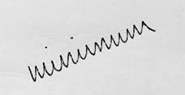
Even my kids, who knew cursive, struggled with this one; however, one of my daughters got it, sparking disbelief and admiration from her siblings. “How can you possibly see what that says!?” they asked in amazement. With cursive, there is an element of fun, of decoding a dead language. Kids think it is cool.
Cursive Handwriting Resources for Homeschoolers
The different homeschooling curricula and workbooks for cursive are legion, so rather than attempt a very inadequate review of them, I refer readers to Cathy Duffy’s exhaustive compendium of cursive handwriting resources on her blog Cathy Duffy Reviews.
What are your tips or questions about homeschooling? Join me and other homeschooling parents in the Homeschool Connections Facebook Group or in the HSC Community to continue the conversation.