Walking With Christ Through Holy Week: A Guide for Catholic Families
Holy Week is not just a sequence of events we remember—it is a journey we are invited to enter. We are, after all, a sacramental Church that participates in a very real way in the life and mission of Christ. The liturgical celebrations we are preparing for are ancient, powerful, and above all supernatural. Let’s take a close look at the events they commemorate.
It can seem that we move from the cheers of Palm Sunday to the silence of Holy Saturday to the joy of Easter morning at breakneck speed as we walk with Christ through glory, confusion, suffering, and victory. We are trying to juggle our faith traditions with our family traditions, along with the demands of daily life. If we can find a way to slow down enough to really ponder Holy Week, we begin to see that it is not just about what happened then… It’s about what is happening in our own lives now. Let’s walk through it together!
Palm Sunday: The King Enters Jerusalem
Jesus enters Jerusalem to cheers of “Hosanna!” The crowds lay down palm branches and even their cloaks—all signs of honor and kingship in the ancient world that are sometimes lost on us today. Also of note: He comes on a donkey, just like King Solomon did (1 Kgs. 1:33–40; Zech. 9:9). He is, however, a different kind of king. Jesus is a humble and peaceful king who comes not to conquer by force, but by love.

There is already tension, though it is minimized here. The leaders are already plotting against Him (Lk. 19:47; Jn. 11:53) even as the crowd cries out their joy. The same voices that cry out in praise will soon fall silent, and some will turn against Him (Mt. 27:22–23).
Palm Sunday reminds us how quickly our hearts can change… and invites us to ask: Do I follow Jesus when it is easy, or also when it costs something? How can I work to ensure my faith is steadfast no matter my circumstances?
Holy Monday and Tuesday: Warnings and Cleansings
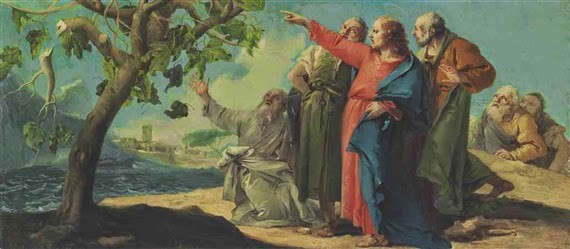
Jesus curses the fig tree, which seems strange at first glance. It’s not really about the tree, but the symbolism behind it. The fig tree, as it has throughout history (Hos. 9:10; Jer. 8:13), represents Israel. It is full of leaves, but without fruit. Jesus’ cursing of the tree is a prophecy of what is going to happen in Jerusalem after the murder of the Messiah.
After the encounter with the tree, Jesus enters the Temple and drives out the money changers. Why? Because what should have been a place of prayer had become a place of transaction. The money changers were no longer conducting their (needed and allowed) business in the designated area but had moved to the court of the Gentiles. This was a special part of the Temple where Gentiles could worship the God of Israel. But the merchants had made this place for God a place for profit. Jesus, fulfilling prophecy, drives them out, while quoting Scripture (Jer. 7:11; Zech. 14:21). This is shocking, disruptive, and uncomfortable. It’s meant to be. The next morning, Jesus and the Apostles pass back by the fig tree and see that it is withered. It is now a visible image of Jesus’s prophecy.
As we reflect on the events of these two days, saturated with moving imagery, we see that there is a theme of quiet idolatry. When God isn’t first, everything else becomes disordered, that is, wrongly ordered (Rom. 1:21–25). This can bring to mind a couple of questions: Where have we made things about ourselves that were meant to be about God? What do we put in place of God?
Spy Wednesday: The Betrayal
Midweek, something shifts quietly but decisively. Judas gives in to his greed and his hardness of heart that has been quietly building since the Bread of Life discourse. For thirty pieces of silver—the price of a slave (Ex. 21:32)—he agrees to betray Jesus.
At the same time, we are given a powerful contrast: a woman (Mary of Bethany) pours out costly perfume on Jesus in an act of love, even drying His feet with her hair. Mary gives everything, while Judas is looking out only for himself. This, too, asks us what matters most in our lives, and challenges us to look for any idols we have given in to. They aren’t always money. They could be screens, food, excessive comfort, or even people we love. We have to put God first in order to love everyone and everything else well.
Activity suggestion: One way to make this lesson powerful for older children is to hide pieces of silver around the house (dimes, quarters, or nickels) and send them in search of them. Chances are, they may find that they unintentionally and momentarily care more about finding that silver than they do about treating their siblings well. This can show them how easy it can be to slip into idolatry.
Holy Thursday: Love Poured Out
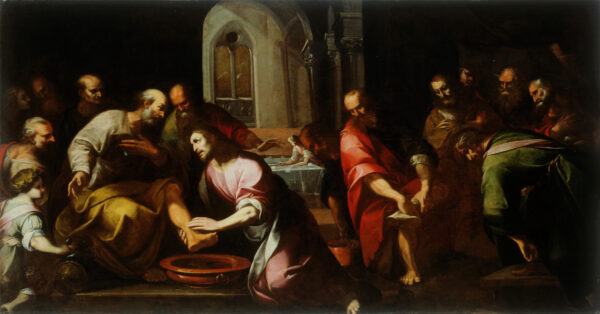
Holy Thursday begins quietly, with preparations for Passover. But everything is about to change. Jesus sends Peter and John to prepare the Passover, keeping its location from Judas, to ensure that He can carry out this important event before He is arrested. At the meal, Jesus, the Master, kneels down and washes His disciples’ feet — even the feet of Judas.
At the meal, Jesus takes bread and wine and says something no one expected: “This is my Body… This is my Blood.”
The Passover has been changed. Fulfilled. Only God can do that. There is no hint of symbolism here, but instead a total fulfillment of what He spoke in the Bread of Life discourse in John 6. Jesus then left the Passover meal, at least according to Jewish directives, unfinished. They sing the traditional hymn (imagine Jesus singing!) and He leads them to the Garden of Gethsemane.
In this garden, we see Jesus in deep agony. He asks His disciples to stay awake and watch with Him. They fall asleep as He prays fervently, even to the point of sweating blood. In His prayer, He unites his human will to His Divine will: “Not my will, but yours be done.”
Holy Thursday shows us what love really looks like: service and sacrifice.
If you are able to visit multiple churches and sit with Jesus on this day, it is a powerful spiritual practice. You can do a search for the Seven Churches Devotion to learn more about this practice!
Good Friday: The Crucifixion of Our Lord
Jesus is brought before the various authorities: religious, political, and cultural, and He is rejected at every level.
Before the Sanhedrin, condemned.
Before Herod, mocked and dismissed
Before Pilate, declared innocent, yet handed over.
Before the crowd, abandoned.
Even Peter, the leader of His followers, denies Him.
And still, Jesus remains steady. He is in control, contrary to all appearances otherwise. After He is condemned to death, He carries His cross Himself, resting it on the wounds from the scourging and finally receiving some assistance of Simon Cyrene – a model of discipleship.
As He is crucified between criminals, He forgives His enemies and gives us His mother.
He thirsts, not just physically, but for souls. And finally, He declares, “It is finished.”
But this is not defeat. This is the moment everything is accomplished. The Old Covenant is fulfilled. Finished. The veil of the Temple is torn, and access to God, closed at Eden, is opened.
When He is pierced with the sword, blood and water flow from His side. This would remind ancient Jews of the Temple, where water and the blood from the sacrifices made there would pour out of the drains installed in the Temple Mount. His Body is the new temple, and the blood and water show us the outpouring of grace to be received in the Sacraments.
Try to spend some time in silence between noon and three p.m. on this day, the traditional times Jesus was on the cross. During this time, encourage reflection on how we show love to those we care about, and how we can put Jesus’s example of self-giving love into practice.
Holy Saturday: The Silence of Waiting
This day feels… quiet. Empty. Confusing. Jesus is in the tomb, and the disciples are scattered. Hope seems lost. Even the tabernacles in our churches are still wide open and empty. The building feels so empty.
But this silence is not meaningless. Christ is at work even on this day—descending to the dead, opening the gates of heaven.
Holy Saturday is for all the moments in our lives when God feels absent, and when prayers seem unanswered. For the times when we are waiting in the dark.
It reminds us that God is still working, even when we cannot see it. Today is a good day to reflect on this reading from the Office of Readings:
An Ancient Prayer for Holy Saturday
Easter Sunday: The Resurrection
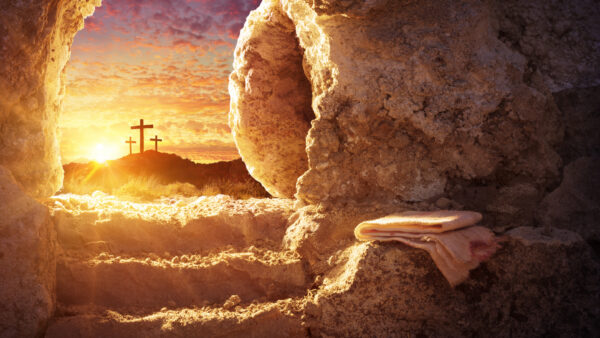
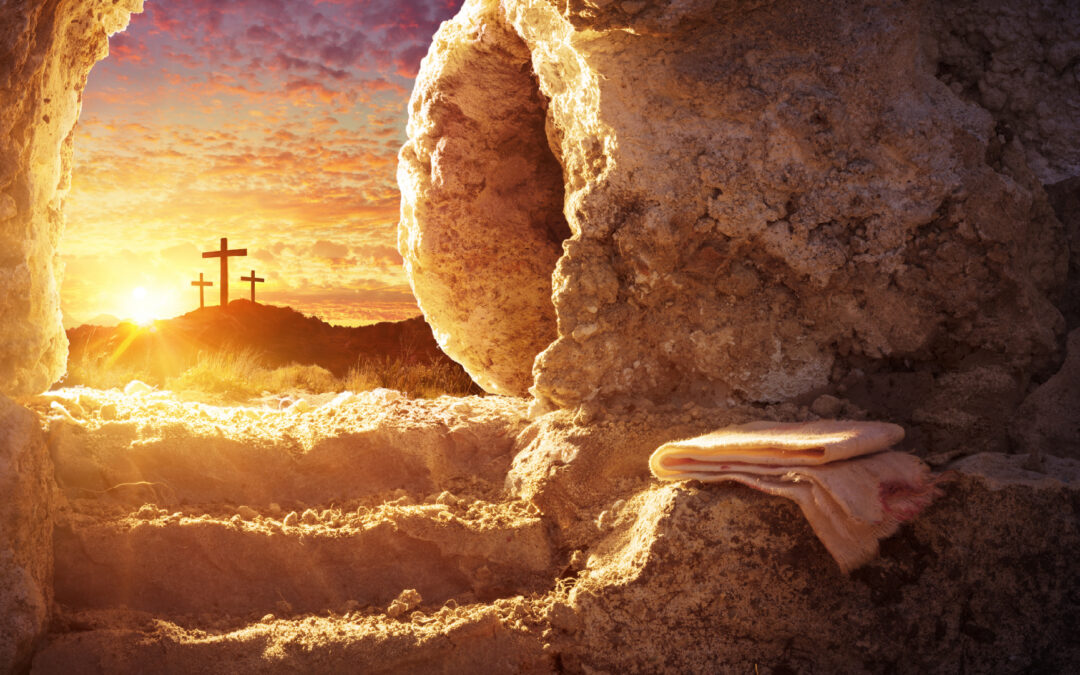
Today, the stone is rolled away. This is not to let Jesus out, He can walk through walls now after all, but to let us see the monumental truth: the tomb is empty. Death is defeated, and everything Jesus said would happen has come to pass. This is not symbolic, and not just spiritual. Jesus is truly, bodily risen, and a new creation has begun.
Mary Magdalene comes in sorrow, but encounters the risen Christ calling her by name. At that moment, everything changes. That is the power of the resurrection — it turns grief into joy, fear into mission, and death into life. It is central to our faith, and what our beliefs stand or fall on. And it promises us a bodily resurrection, also foreshadowed in the Assumption of Mary. One day, in a perfect and restored heaven and earth, we will rise again in our bodies and live the perfection that we all long for deep in our hearts. That perfect world is something we are able to desire because it is promised, and it will come to pass. That is the promise and that is our hope. Thanks be to God!